
Japanese knotweed

About
Fallopia japonica or Japanese knotweed is known as one of the 100 worst invasive species in the world. It was first introduced to Ireland in the late 19th century for ornamental use. However, it escaped into the wild, and has spread throughout the country. This weed is now causing problems in many parts of County Galway.
How to recognise it?
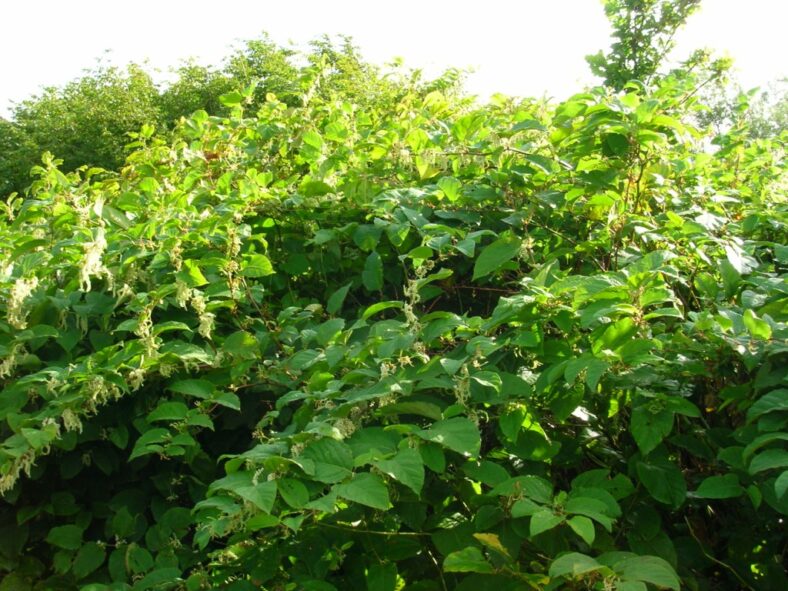
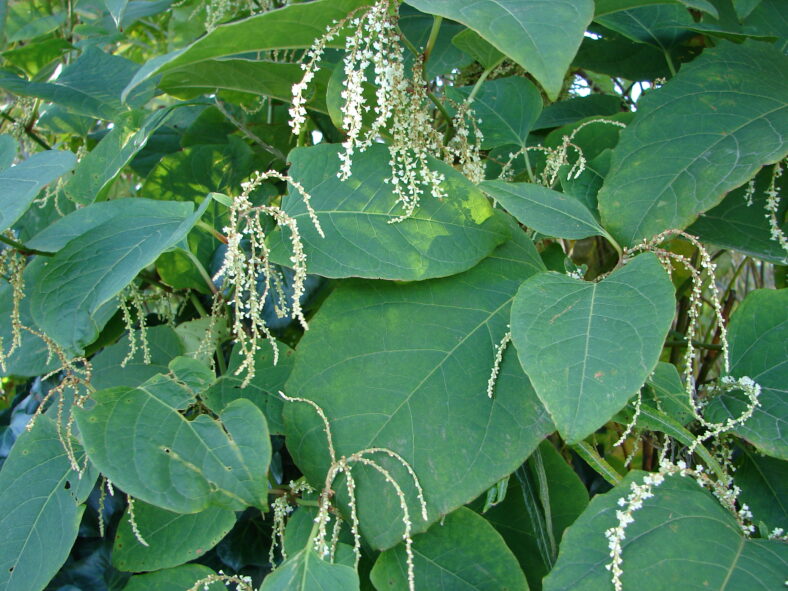
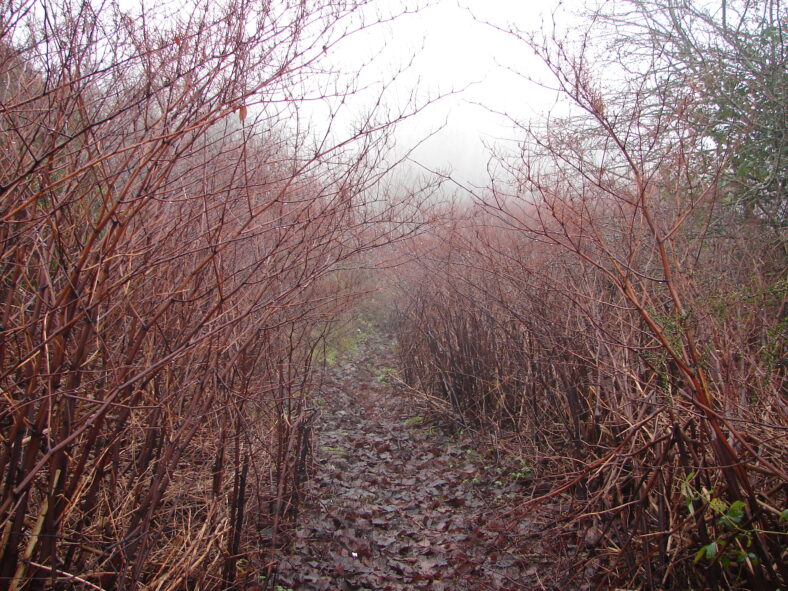
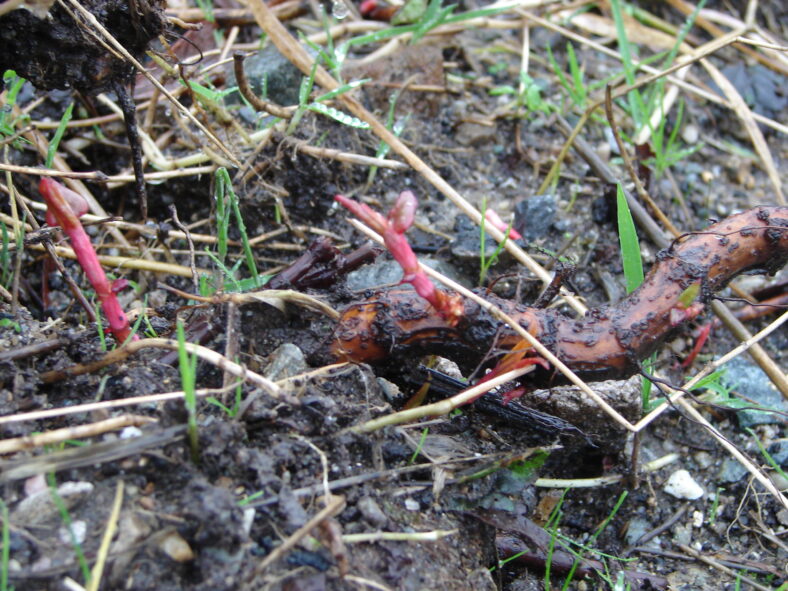
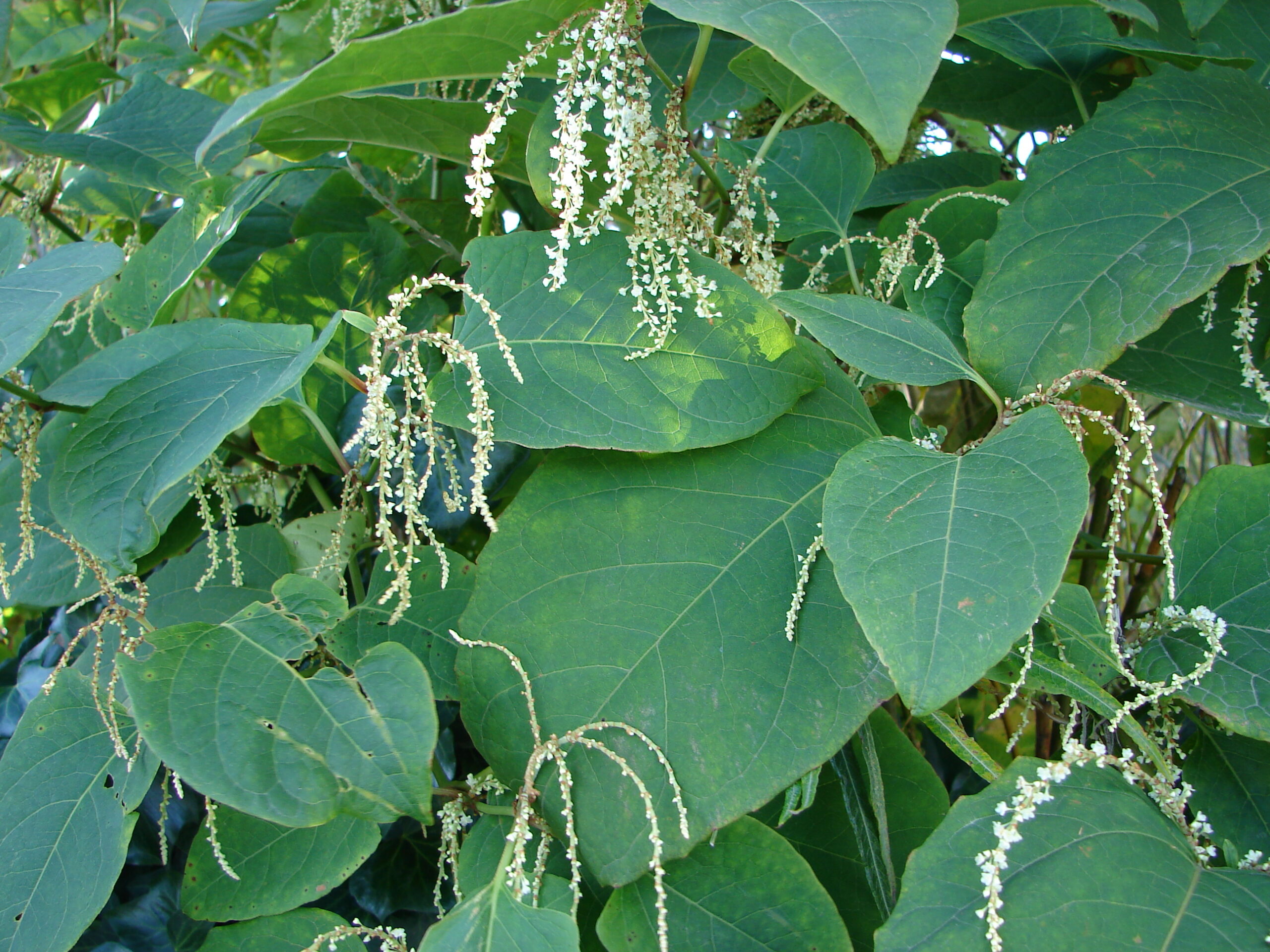
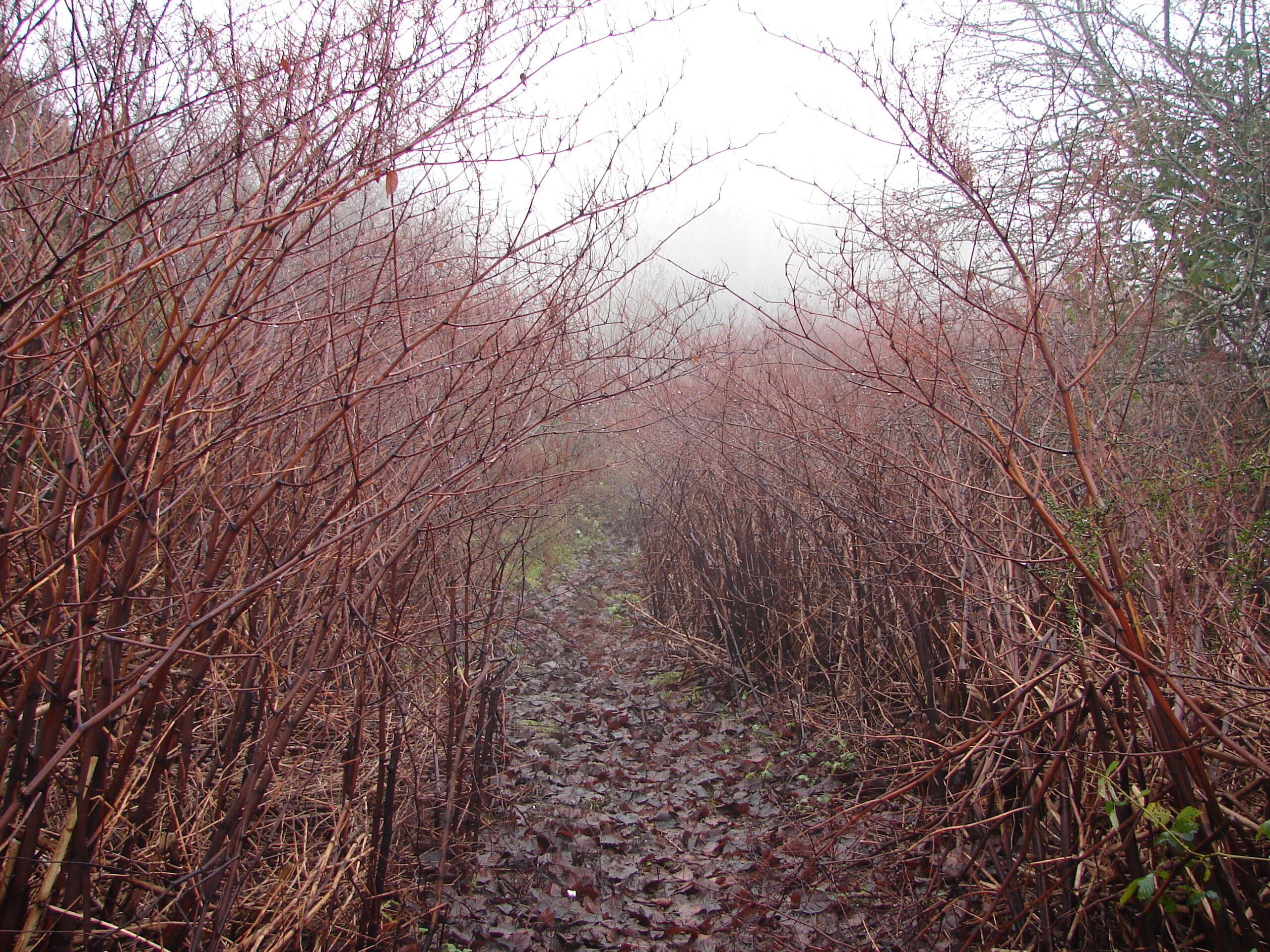
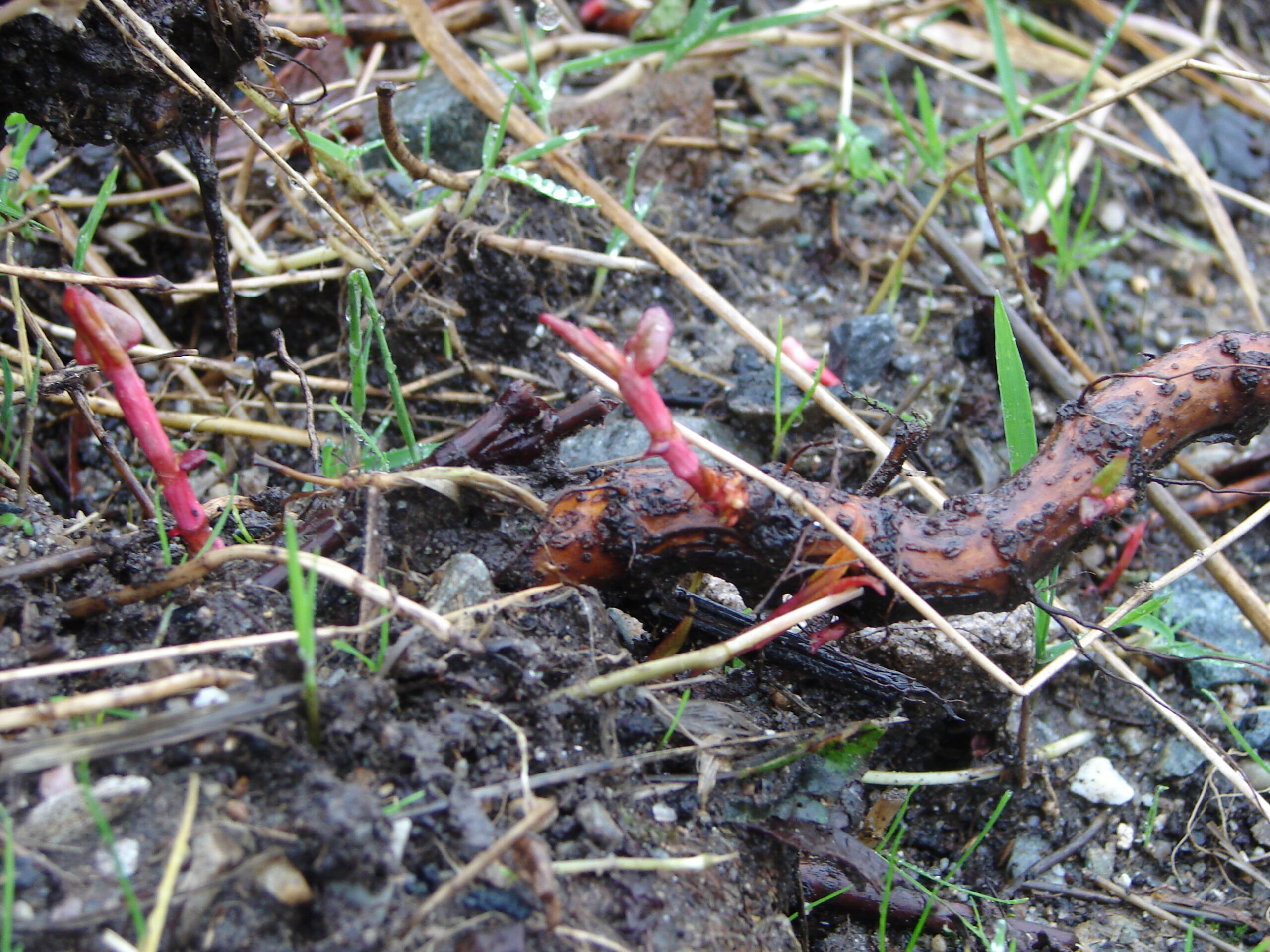
The hollow stems of the plant are purple or green, and resemble bamboo canes. The leaves are bright green, shield or heart shaped and grow in zig-zags along the branches. It produces long strings of creamy-white flowers late in the summer. Underground the extensive rhizomes (underground stems resembling roots) are bright orange when cut open. In winter the plant dies back leaving distinctive brown stems.
There are four species of invasive knotweeds common in County Galway. Japanese, Giant and Bohemian knotweed are all very similar in appearance with the main difference evident in the size of the leaf and the plant itself. Himalayan knotweed is more distinguished in having a longer leaf shape and straighter stems.
All the invasive knotweed species are similar in behaviour and require the same treatment.
Why is it a problem?
Knotweed grows very vigorously and quickly forms dense thickets that can take over gardens, and wildlife habitats. It can rapidly spread along roadsides, riverbanks, railway lines and derelict sites. When the plant dies back in winter it leaves bare ground which is more susceptible to erosion. In urban environments, it has even been known to grow through walls, tarmac and concrete!
How does it spread?
Although Japanese knotweed produces flowers, the plants in Ireland are infertile, and cannot produce seed. Instead, the plant spreads by growth of its rhizomes and by fragmentation. The rhizomes can grow up to 7 m out from the parent plant and up to 3 m deep. In addition, any cut or broken fragments of the root or stem will sprout to form new plants. The plant is most commonly spread by the movement of soil from infected areas, or by the mowing or flailing of plants in lawns or hedgerows.
Legislation
Japanese knotweed and its relatives are listed on the Third Schedule of the European Communities (Birds and Natural Habitats) Regulations, 2011 (S.I. No. 477 of 2011) which makes it an offence under Regulation 49 to plant, disperse, allow or cause to grow these plants in the Republic of Ireland.
Regulation 50 makes it an offence to import, buy, sell, breed, reproduce or propagate, advertise, offer or export for sale, publish a price list, transport or distribute any species on the Third schedule. (This regulation is not in effect pending Ministerial notice)
A licence may be obtained in certain circumstances to permit these activities.
What can you do?
- Record the location of knotweed with the National Biodiversity Data Centre http://www.biodiversityireland.ie/projects/invasive-species/submit-sightings/
- Inform landowners that have knotweed on their property.
- Do not move or dig soil within 7m of an infestation.
- Knotweed should never, ever be cut, flailed, mulched or strimmed.
- Do not dump or compost living remains of the plant. Allow to rot down in sealed containers with water.
- Control: Use the most suitable method to remove the infestation from your property (see below).
Control
Manual Control
This is not generally recommended for Japanese knotweed, as cutting or disposing of the plant may cause it to spread further. It may be necessary on development sites to excavate the knotweed completely and dispose of by bunding and deep burial onsite or offsite at a licenced waste facility. There are only a limited number of these sites in Ireland and currently none in Co. Galway. Do not place knotweed in your brown bin.
Chemical Control
Herbicides usually provide the best and most cost effective method for Japanese knotweed control. Herbicides should only be used by authorised and qualified professionals to ensure safe and effective application, and to minimize potential environmental impact. When speaking with contractors to treat knotweed on your land, know the size of the infestation and if it is near water.
When considering who to hire, ask the potential contractor about their previous experience in treating invasive species, if have they membership of any professional organisations, what qualifications that have for spraying herbicide, what biosecurity measures they will take to prevent the spread of invasive species on site and if they will be using a herbicide that will persist in the soil after the treatment. Also be sure to get a price for the treatment for this year and subsequent years. It is highly unlikely that the infestation will be eradicated with one chemical treatment.
A systemic herbicide that will kill the roots of the plant is needed and a Glyphosate based formula is recommended. Weedkiller can be applied in 2 ways:
Foliar spray: Using the manufacturers recommended concentration, leaves should be sprayed until the point of ‘run-off’ i.e well coated but not dripping. A long lance sprayer is useful to ensure coverage of large plants. Spraying should only be carried out in cool, dry, calm weather.
Stem injection: The hollow stems are injected with a small amount of concentrated herbicide using a specialised injector gun. This method is recommended for sensitive sites such as around waterbodies.
Care must be taken when using herbicides, and carefully consider your impacts on nearby land or waterways. Read the label carefully, and always use appropriate safety equipment.
Timing
In Ireland, herbicide treatment of knotweed is most effective when applied in late summer to autumn, after flowering. Very large stands which would be difficult to cover when fully grown may need two treatments in the season. The first spray should be in May which will make the area accessible for a second spraying in September.
It should take about 3-4 years of annual treatments to clear the worst of the infestation, after which you should perform annual checks to control any new growth.
Pesticide regulations
Sensitive and Protected Areas
In locations that are classed as Special Areas of Conservation and other sensitive sites and connecting sites, treating invasive species requires a careful and considered approach. An Appropriate Assessment Screening under the Habitats Directive should be carried out when planning the treatment of invasive species in areas that fall under Natura 2000 sites, which include Special Areas of Conservation (SACs) and Special Protection Areas (SPAs). To see if the site you plan to treat is part of the Natura 2000 sites click here
This screening is the first step in the process and is conducted to determine, based on a preliminary assessment and objective criteria, whether the plan or project, alone or in combination with other plans or projects, could have significant effects on the conservation objectives of a Natura 2000 site.
If the screening process cannot exclude the possibility that the plan or project could have a significant effect on a European site, there is a requirement for the preparation of a Natura Impact Statement to inform the Appropriate Assessment process.
This process is crucial to ensure that the treatment of invasive species does not adversely affect the integrity of these protected sites.
A qualified ecologist should carry out the screening and also speak to your local NPWS ranger prior to any works in or connected with an SAC or SPA, as any herbicide treatment will also require consent
Further Information
Further Information about Japanese knotweed and other invasive species can be found at:
http://biodiversity.galwaycommunityheritage.org/
http://www.biodiversityireland.ie/projects/invasive-species/
Contact Details
To report Japanese knotweed on public land (e.g. along the public road). Galway County Council is not responsible for knotweed that occurs on private property.
Email: [email protected]
 Loading...

 Reload document
  Open in new tab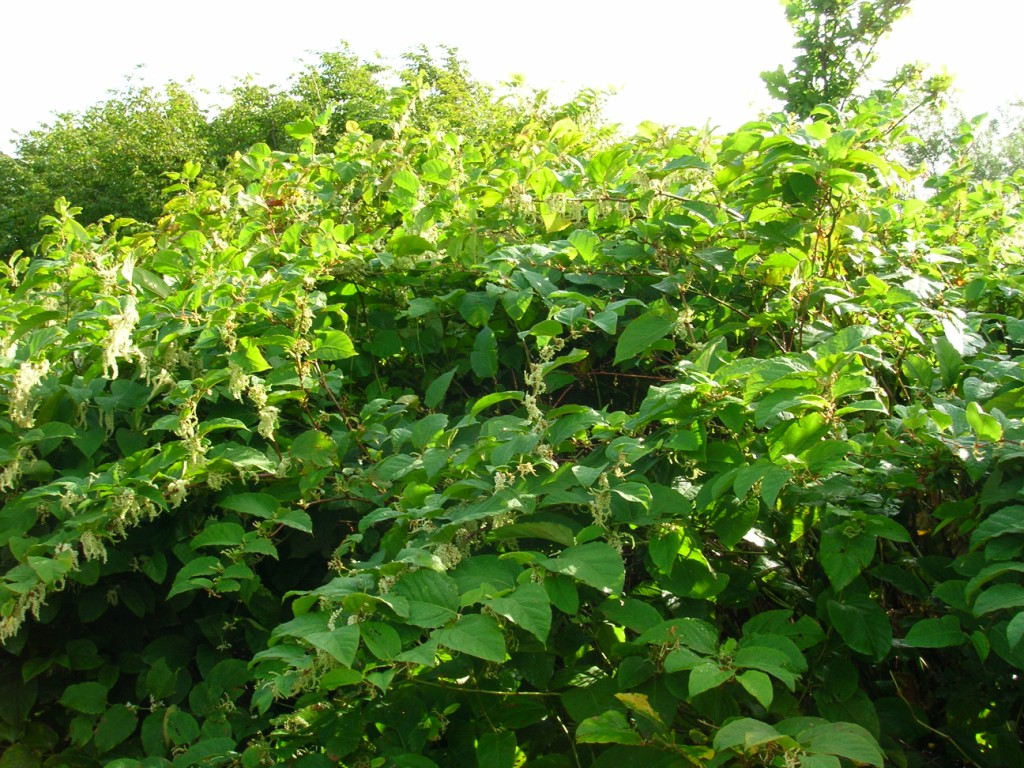
 Loading...
No Comments
Add a comment about this page